FLAIR, MIT CISR and Gartner: AI maturity models compared
Compare FLAIR, MIT CISR and Gartner by scope, stages and practical use. Understand how FLAIR separates operating phases from maturity, with explicit attention to iteration and realised value.
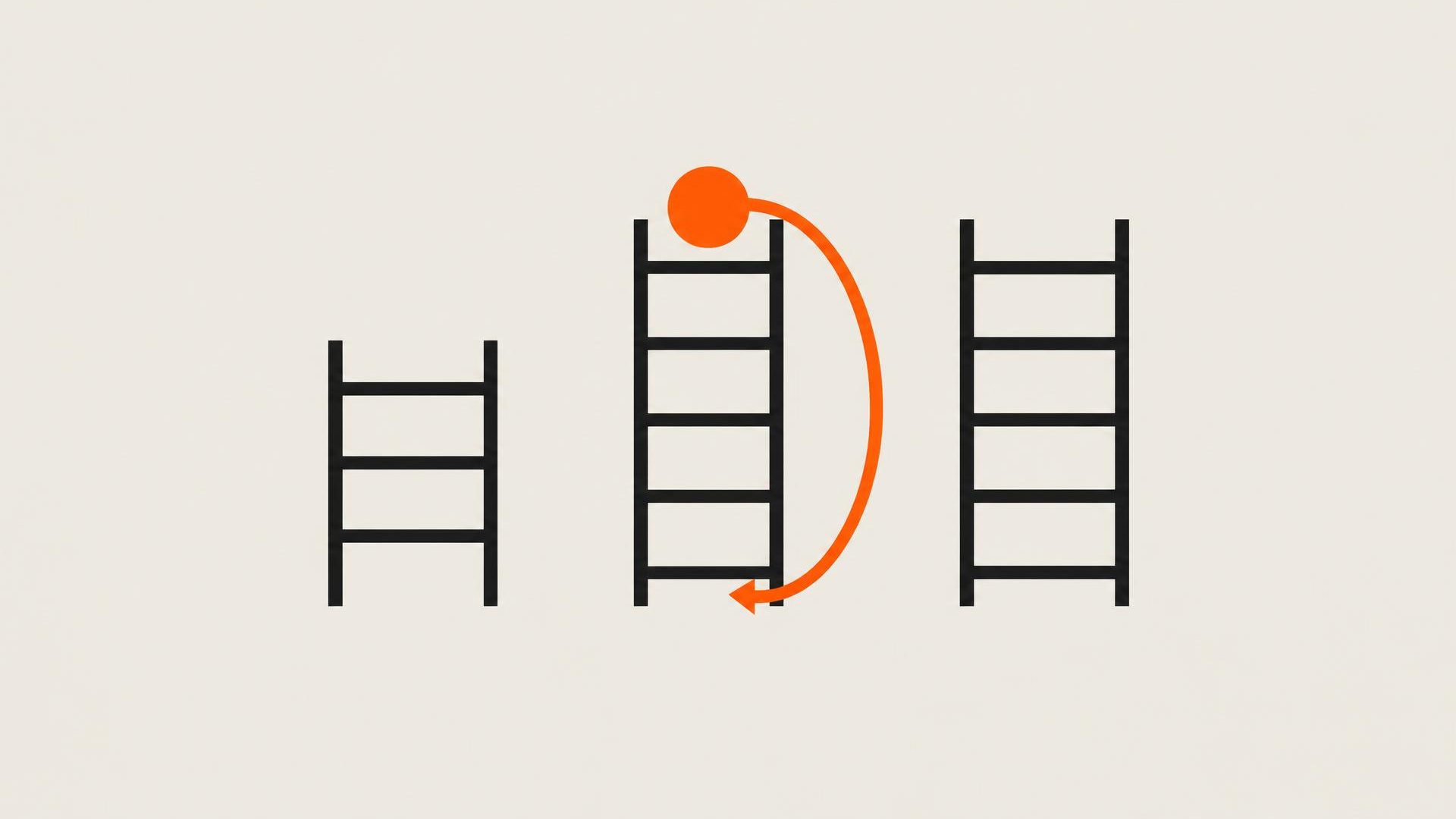
An AI maturity model should help you identify the capabilities you need next, not simply give your programme a flattering label. MIT CISR maps enterprise progress, Gartner assesses capabilities across seven pillars, and FLAIR connects a repeating operating cycle with an assessment that includes what happens after launch.
I would not choose between them by counting stages. Four is not less sophisticated than five, and a longer questionnaire is not automatically a better management decision.
The useful question is what you need the assessment to change. An enterprise roadmap, a capability investment and a neglected assistant are related problems. They are not the same meeting.
What an AI maturity assessment should tell you
Before picking a framework, decide the unit you are assessing. Is it the whole organisation, a business function or a particular initiative? Then decide what evidence will support the answers and who can authorise the next action.
Without that discipline, teams can assess different things while appearing to agree. Technology might score the platform. Operations might score the daily workflow. Finance might score the benefits it can actually see. An average can conceal a fairly substantial argument.
I would ask each person to bring an example of something working, something failing and something nobody owns. That makes the discussion harder to bluff and easier to use.
MIT CISR: four stages of enterprise capability
Peter Weill, Stephanie L. Woerner and Ina M. Sebastian published Building Enterprise AI Maturity on 19 December 2024. Their model identifies four stages, drawing on a 2022 survey of 721 companies and supplementary executive interviews in 2024. The briefing explains that the survey findings primarily concern analytical, or traditional, AI rather than today's generative AI deployments. (Source: MIT CISR.)
The stage names in the original briefing are Experiment and Prepare; Build Pilots and Capabilities; Develop AI Ways of Working; and Become AI Future Ready. The progression runs from education and experimentation through pilots to scalable ways of working and continuous innovation. (Source: MIT CISR.)
This is not just a technology ladder. The model includes policies, human oversight, management behaviour, data access, reuse and business processes. MIT Sloan's February 2025 explainer recommends thinking about which stage describes most of the organisation's AI activity, rather than an exceptional project at the edge. (Source: MIT Sloan.)
My reading is that it suits a leadership team asking how to develop enterprise-wide capability. It gives that team a common language for moving beyond isolated experiments. It does not follow that every department has reached the same place.
Nor should an association between maturity and financial performance be read as a promise that moving up a stage will cause a particular return. The original research describes its evidence and its timing. A comparison should preserve both qualifications. (Source: MIT CISR.)
Gartner: a broad capability diagnostic
Gartner's public AI Maturity Assessment page describes seven core pillars: strategy, data, governance, engineering, operating model, culture and AI product/value. It presents the assessment as a way to identify gaps, prioritise initiatives and develop a roadmap towards measurable impact. Its interactive demo begins with a form. (Source: Gartner.)
A separate public Gartner release, dated 30 June 2025, describes a survey based on its AI Maturity Model. Each assessed area was rated from Level 1, “planning/beginning”, to Level 5, “leadership”. That confirms a five-level scale for that published application; it does not provide a complete public list of intermediate level names. (Source: Gartner survey release.)
I would consider Gartner when a technology and business leadership team needs a broad diagnostic across those capabilities. That is an interpretation of its published scope, not a claim about everything in the full assessment.
It would also be unfair to describe Gartner as concerned only with getting pilots launched. Its public assessment page explicitly connects the roadmap with measurable ROI. FLAIR's emphasis is different, but it does not have a monopoly on caring about results. (Source: Gartner.)
FLAIR: an operating cycle, not five launch gates
FLAIR stands for Foundation, Leverage, Activation, Iteration and Realisation. The A is Activation. The public Scorecard page describes these as operating phases followed in order as a repeating cycle; the assessment treats the same five areas as pillars.
Foundation asks whether the conditions are ready. Leverage asks where AI matters. Activation asks how to make it real. Iteration asks how it improves. Realisation asks how it becomes infrastructure. The cycle does not end when somebody sends a launch email.
The FLAIR Scorecard scores each pillar from zero to five, giving a total out of 25, a maturity stage, a binding constraint and a first move. It takes a few minutes and needs no sign-up.
There is an important distinction here. FLAIR has five operating phases and a separate five-stage maturity structure. A stage describes current capability; it is not permission to skip straight to the corresponding phase. The book's Maturity Model supports evidence-based self-placement rather than calculating another score.
A simple comparison, without pretending the scores match
The external model details below come from the original MIT briefing and explainer and Gartner's public assessment page and survey release. (Sources: MIT CISR, MIT Sloan, Gartner, Gartner survey release.)
MIT CISR: four stages — Experiment and Prepare; Build Pilots and Capabilities; Develop AI Ways of Working; Become AI Future Ready. Focus: cumulative enterprise capability. I would use it for a leadership conversation about the enterprise's direction and the capabilities needed next.
Gartner: seven capability pillars, with a five-level scale confirmed in its published survey application. Focus: gaps, priorities and an AI roadmap across strategy, data, governance, engineering, operating model, culture and AI product/value. I would use it to structure a broad capability diagnostic.
FLAIR: five repeating operating phases assessed as pillars, plus a separate five-stage maturity structure. Focus: running AI from readiness and use-case selection through activation, continuing improvement and sustained value. I would start with its free Scorecard when the team needs a practical first move.
These are not interchangeable scales. A FLAIR score cannot be converted into an MIT stage by dividing one number by another. Nor should similar stage numbers imply equivalent capability.
Where FLAIR puts the pressure after launch
The question I want a leadership team to answer is fairly ordinary: who is checking that this still works?
The Iteration Review records output samples, drift, feedback, usage, version changes and a reasoned decision. Continuing is a decision to support with evidence, not the default produced by nobody opening the file.
The Realisation Assessment looks for evidence that AI has become part of how the organisation runs. Its indicators include sustained attributable financial impact, lessons moving between assistants and a review cadence that does not need leadership intervention. It records indicators and habit signals without manufacturing a combined score.
That is where FLAIR differs in emphasis: it makes continuing ownership and realised value explicit operating work. It is not evidence that the other models ignore either subject.
Choose the next decision, then choose the model
If you need an enterprise capability discussion, read MIT CISR. If you need a broad diagnostic across Gartner's published capability areas, explore its assessment. If the problem is turning launch activity into a routine that holds, start with FLAIR's operating cycle.
You can use those perspectives together. Just keep their definitions separate and ask for evidence before agreeing the label.
Take the free FLAIR Scorecard, compare the five pillar scores with your colleagues and agree one action with an owner. A maturity assessment earns its place when something changes after the meeting.
Questions and answers
- What is an AI maturity model?
- It is a framework for describing current AI capability and identifying what needs to develop next. Its usefulness depends on the evidence and decisions attached to the assessment.
- How many stages does MIT CISR use?
- Its Enterprise AI Maturity Model has four stages, from Experiment and Prepare to Become AI Future Ready.
- Does Gartner have five maturity levels?
- Its June 2025 public survey release confirms ratings from Level 1, planning/beginning, to Level 5, leadership. The public assessment page also describes seven core pillars.
- Does FLAIR mean Adoption or Activation?
- The A stands for Activation. Adoption is an important concern, but it is not the public name of the phase.
- Is the FLAIR AI maturity assessment free?
- The Scorecard is free, takes a few minutes and needs no sign-up. It scores five pillars out of five each, for a total out of 25.
Comments
No comments yet.
Leave a comment
Loading the comment form